What the best month to see bears on alaska bear tours really means for planners
Planners chasing the highest-odds trip need to think less about a single perfect week and more about which phase of the bear season lines up with the time they’ve actually got. Some travelers do better in the quieter early weeks. Others need the chaos of peak salmon season to guarantee a sighting. Neither is wrong — picking blind, based on a generic “summer is best” answer, is how people end up disappointed at an empty riverbank.
Why ‘Best Month’ Is the Wrong First Question for Alaska Bear Tours
A cruise passenger emails asking whether July or September is “the” month for bears, then finds out her ship’s only in port for nine hours. That question — asked in isolation — leads people to book the wrong trip entirely. The calendar matters less than what a guest can actually reach in the time she’s got. Someone booking Alaska bear tours with a fixed return deadline needs a different answer than someone flying in for a five-day camp stay.
What Actually Drives Bear Activity Timing
Bears follow food, not a tourism calendar. Early summer means grazing on sedges near tidal flats. Mid-summer through fall, it’s salmon — and that shifts bears toward rivers and falls in predictable waves. Three factors drive when bears show up in numbers: run timing, water levels, and berry availability further inland. Get any one wrong, and you’re watching an empty riverbank.
How Port Time and Trip Length Change the Calculus
Realistically, a guest with four hours ashore shouldn’t be chasing the same window as someone with a week. Short port stops favor closer, boat-accessible viewing sites over remote fly-in camps. Longer trips can absorb a weather delay or a slow feeding day. That’s the real planning question — not which month wins — which month fits the time actually available.
Breaking Down the Alaska Bear Season Month by Month
There’s no single “right” month — there’s only the right month for what you want to see. That’s the truth most booking sites skip over. Picking a date without matching it to bear behavior is how folks end up staring at empty gravel bars.
Early Season (June): Grass-Eating Bears and Thin Crowds
June bears are lean, grazing on sedges near river mouths and coastal flats — no salmon yet, so the action is quieter. Crowds are thin at most camps and platforms this month. Good for photography without forty tripods in your frame, but don’t expect the frenzy people picture when they think of grizzly bear tours.
Peak Salmon Run (July): The Brooks Falls Rush
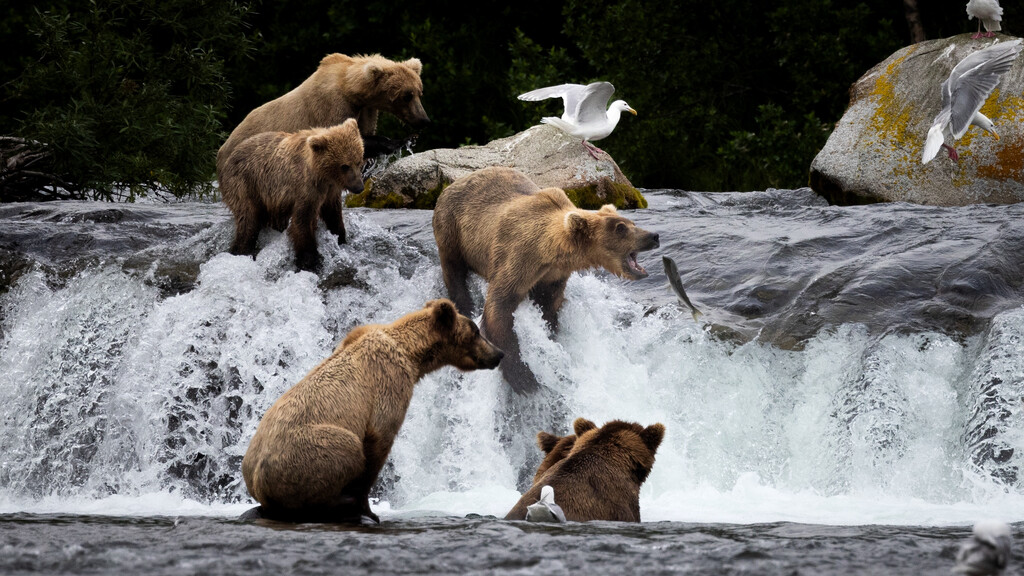
July is the month everyone’s picturing. Brooks Falls bear viewing hits full stride as sockeye pile up below the falls and brown bears line up to fish. This is peak population density at the platform — permits fill fast, and lodges book out months ahead. If the goal is that classic leaping-salmon shot, mid-to-late July is non-negotiable.
Late Season (September): Big Bears Fattening Up for Winter
By September, bears are bulking hard before denning, and coastal spots often show bigger, heavier animals than July’s crowd. Fewer tourists, cooler weather, decent odds — a solid trade-off for planners who missed the July window.
Bear Safety Realities That Change by Season
Bear behavior isn’t static, and any guide who tells you otherwise hasn’t spent enough seasons on the water. Early summer bears are hungry, thin, and unpredictable after denning — they’re testing sedges and grass, not fixated on one food source yet. That changes fast once salmon start stacking up in the shallows.
What Guides Actually Watch For Around Salmon Runs
Once fish arrive, bears get tunnel vision. That’s actually good news for viewing — a brown bear standing in a river chasing salmon isn’t thinking about the group of people watching from a platform 50 yards off. But it also means more bears crowding smaller stretches of water, which raises the odds of a surprise encounter along a trail.
Guides running Alaska bear tours during peak run weeks watch three things constantly: wind direction, bear body language, and how many fish are actually moving. No fish, no bears — simple as that.
- Late spring: scattered bears, lower density, longer scouting time
- Peak salmon weeks: highest concentration, tightest safety protocols
- Late season: bears gorging pre-denning, less tolerant of interruption
Experienced operators — the ones running trips near Brooks Falls or similar salmon-heavy waters — adjust group spacing and viewing platforms based on fish counts, not the calendar alone.
Choosing a Bear Viewing Trip That Matches Your Actual Travel Window
How many days do you actually have to spare? That’s the first question, not the last one. A lot of folks fall in love with photos of Brooks Falls bear viewing platforms and forget they’ve only got a single port day or a three-day weekend to work with. Realistically, Alaska bear tours split into three real categories — day trips, overnight camps, and multi-day lodge stays — and each one demands a different amount of slack in your schedule.
Matching Tour Length to Cruise or Flight Schedules
If you’re arriving on a ship or flying in and out of Anchorage on a tight window, a day trip from Anchorage to Katmai National Park (weather-dependent floatplane hop plus a few hours at the falls) is often the only option that fits. Build in a buffer day — fog grounds flights more than people expect.
Camps, Platforms, and Day Trips: Sorting Out the Real Differences
Camps put you closer to grizzly bear activity for sunrise and sunset feeding windows that day-trippers miss entirely. Platforms near Brooks Falls offer controlled, elevated viewing — safer, but shared with a crowd. Boat-based viewing near Lake Clark or Kodiak Island trades platform structure for closer, quieter encounters. Pick based on patience, not just budget.
What Planners Get Wrong About Timing Alaska Bear Tours
Here’s a number that surprises people: roughly 70% of bear sightings at popular viewing platforms cluster into a six-week stretch each year — and most folks booking Alaska bear tours miss it because they’re going off generic “summer in Alaska” advice instead of salmon timing.
I’ve watched groups fly in during early June expecting a Brooks Falls bear viewing spectacle, only to find thin crowds of bears and no fish jumping yet. The salmon run drives everything. Bears don’t show up on a calendar — they show up when the river fills with food.
Three mistakes I see constantly:
- Booking based on cruise ship schedules instead of run timing for the specific river system
- Assuming all bear camps in Alaska peak at the same time (they don’t — coastal brown bear spots and interior grizzly territory run on different clocks)
- Ignoring weather windows that ground floatplanes out of Anchorage for days at a stretch
Realistically, late June through mid-September covers most viable viewing, but the difference between week two of July — week four can mean watching a dozen bears fishing versus watching an empty gravel bar. Ask any outfitter running a lodge near Katmai — they’ll tell you the same thing straight.