
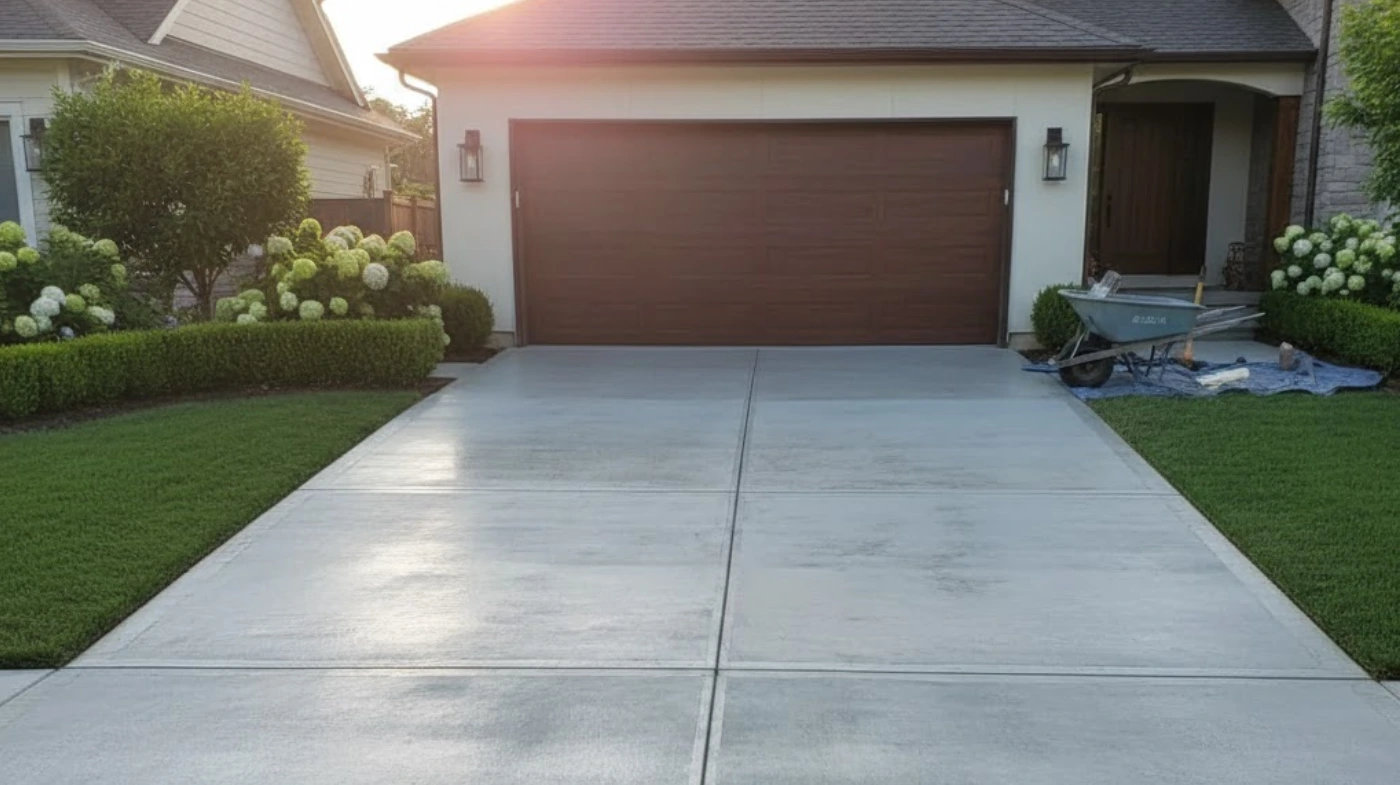
The Real Cost of Getting Your Concrete Driveway Wrong
Your driveway is one of the first things people notice about your home. It frames the property, takes a daily beating from vehicles and weather, and quietly signals how well-maintained everything else is. So when it starts to crack, sink, or crumble, the question isn’t just aesthetic—it’s structural.
Concrete driveway installation is one of the most impactful home improvement projects you can invest in. Done right, it adds curb appeal, boosts property value, and lasts for decades. Done wrong, it becomes an expensive headache within a few years. The difference usually comes down to one thing: how the job was approached from the start.
Why Concrete Outperforms the Alternatives
Homeowners often weigh concrete against asphalt or pavers when planning a driveway. Each has its place, but concrete consistently wins on longevity and low maintenance.
Asphalt is cheaper upfront, but it requires resealing every few years and tends to soften in extreme heat. Pavers offer great visual variety, but the gaps between them invite weeds and shifting over time. Concrete, when properly installed, holds its shape and surface for 30 years or more with minimal upkeep.
The catch? It has to be installed correctly. A poorly poured concrete driveway can develop cracks within months—not years—especially in climates with significant freeze-thaw cycles. And once those cracks widen, water gets in, the subbase erodes, and the surface becomes uneven and unsafe.
What Actually Goes Into a Quality Installation
Most homeowners picture concrete driveway installation as simply pouring and smoothing a slab. The reality involves far more preparation than that.
Site Preparation and Excavation
Before a drop of concrete is poured, the existing ground needs to be properly prepared. This typically means excavating 6 to 8 inches of soil to make room for the subbase and the concrete itself. Any organic material, soft spots, or unstable ground must be removed.
Getting this stage wrong is one of the leading causes of premature driveway failure. A subbase that isn’t compacted properly or graded correctly will shift over time, taking the concrete with it.
Subbase Installation
A strong, stable subbase is the foundation on which everything else depends. Crushed gravel or compacted aggregate is layered and compressed to create a firm, well-draining base. This layer manages moisture—directing water away from the slab rather than letting it pool underneath, which is a major cause of cracking.
The thickness and material used for the subbase will vary depending on your soil type, climate, and expected load. A property with clay-heavy soil, for example, needs extra attention here.
Forming and Reinforcement
Timber or steel forms are set to define the shape and edge of the driveway. These need to be level, secure, and correctly aligned before any concrete is placed.
For driveways expected to support heavier loads—SUVs, trucks, or regular deliveries—steel reinforcing mesh or rebar is laid within the forms to strengthen the slab and reduce the risk of cracking under pressure.
The Pour and Finish
Once the forms are in place and the subbase is ready, the concrete is poured and screeded to an even surface. The finishing stage—where the surface is smoothed, textured, or patterned—has to happen within a specific timeframe while the concrete remains workable.
Expansion joints are cut or placed at regular intervals to give the concrete room to expand and contract with temperature changes. Miss this step, and the concrete will find its own place to crack.
Curing
This is the stage that impatient projects almost always rush. Concrete needs time to cure—typically 7 days before light foot traffic and up to 28 days before it reaches full strength. Driving on it too soon can cause surface damage that will never fully recover.
Common Mistakes That Lead to Early Failure
Even when homeowners use experienced contractors, problems arise when corners are cut. Here are the most frequent culprits:
- Adding too much water to the mix. It makes the concrete easier to work with, but significantly weakens the final product.
- Skipping the subbase. Pouring directly onto soil might seem fine initially, but seasonal movement will cause the slab to crack.
- Ignoring drainage. A driveway that doesn’t slope away from the home channels water toward the foundation—a problem that compounds over time.
- Insufficient thickness. Residential driveways should be at least 4 inches thick. Going thinner to save on materials is a false economy.
- No expansion joints. Concrete moves. Without joints to accommodate that movement, the slab cracks unpredictably.
What to Expect from a Professional Installation
Working with a professional concrete driveway installation service takes the guesswork out of the process. HeavenScape handles every phase—from initial site assessment and excavation through to pouring, finishing, and curing—so the job is done to the standard that a 30-year lifespan demands.
Every property is different. Slope, soil condition, drainage patterns, and intended use all factor into how the installation is planned. A professional team evaluates these variables before any work begins, rather than applying a one-size-fits-all approach.
The result is a driveway that looks sharp from day one and stays that way.
Decorative Options Worth Considering
Concrete doesn’t have to be plain grey. Modern installation techniques open up a range of finishes that add personality to a property without sacrificing durability.
Exposed aggregate reveals the natural texture of stones within the concrete mix, creating a non-slip surface with visual depth. Brushed or broom finish is the most common choice—practical, affordable, and clean-looking. Stamped concrete can mimic the appearance of pavers, cobblestone, or slate at a fraction of the cost, though it requires sealing to maintain its look.
Color can also be added to the mix or applied as a surface stain, giving homeowners the ability to complement their home’s exterior palette.
How Long Does Installation Take?
For a standard residential driveway, the physical installation process—excavation, forming, pouring, and finishing—typically takes one to two days. Curing, however, extends the timeline. Plan for at least a week before light use and a full month before parking heavy vehicles on the surface.
Weather matters, too. Concrete should not be poured in freezing temperatures or during heavy rain. Scheduling installation during mild, dry weather gives the best results.
Is It Time to Replace or Repair?
Not every driveway problem requires a full replacement. Hairline surface cracks can often be sealed and managed for years. But when cracks are wide, deep, or numerous—or when sections of the driveway have begun to heave or sink—repair work becomes a temporary fix at best.
A full concrete driveway installation makes more sense when:
- The existing surface is more than 25–30 years old
- There is widespread cracking or significant surface deterioration
- The subbase has shifted, and sections are uneven
- Water consistently pools on or near the driveway
A Driveway That Works as Hard as You Do
Concrete-driveway-installation provides homeowners with a durable, low-maintenance surface designed to handle daily vehicle traffic while enhancing curb appeal, improving property value, and delivering decades of reliable performance when installed with proper grading, reinforcement, and curing techniques. A well-installed concrete driveway is one of those home improvements that simply gets out of the way and does its job. No resealing every few years. No weeds pushing through the joints. When the foundation beneath the concrete is properly prepared, and the installation is handled with precision, the result is a smooth, stable surface that remains dependable through changing weather, heavy use, and the normal wear that comes with everyday life.
The investment pays off in reduced maintenance costs, improved property value, and the quiet satisfaction of a driveway that looks as good in year 15 as it did on day one.
If your current driveway is showing its age—or you’re starting from scratch on a new build—HeavenScape’s concrete driveway installation service is ready to deliver a result built to last. Get in touch today to discuss your project.
Disclaimer:
This article is intended for general informational purposes only and does not constitute professional construction, engineering, or legal advice. While every effort has been made to ensure the accuracy and relevance of the information provided, driveway conditions, soil types, climate factors, and installation requirements can vary significantly by location and property. Readers are advised to consult with qualified contractors or construction professionals for an assessment specific to their project before making any decisions. Any references to services, including HeavenScape, are for illustrative purposes only and do not guarantee specific results. The author and publisher accept no liability for any outcomes resulting from the use of this information.